Helton Creek (Virginia state
line to New River)
Burke
County
Jacob Fork - Shinny Creek
to lower South Mountains State Park boundary
Haywood
County
Richland Creek - Russ
Avenue bridge to US 19A-23 bridge
Henderson
County
North Fork Mills River
- game land portion below the Hendersonville watershed dam
Jackson
County
Tuckaseegee River - NC
107 bridge at Love Field to the Dillsboro dam
Macon
County
Nantahala River - White
Oak Creek to CP&L powerhouse discharge canal
Madison
County
Big Laurel Creek - NC
208 bridge to the US 25-70 bridge
Shelton Laurel Creek - NC
208 bridge at Belva to the confluence with Big Laurel Creek
McDowell
County
Curtis Creek - game lands
portion downstream of U.S. Forest Service boundary at Deep Branch
Mitchell
County
Cane Creek - NC 226 bridge
to NC 80 bridge
Polk
County
Green River - Fishtop
Falls Access Area to confluence with Cove Creek
Surry
County
Ararat River - SR 1727
downstream to Business US 52 bridge
Mitchell River - 0.6 mile
upstream of the end of SR 1333 to Kapps Mill Dam
Watauga
County
Watauga River - Confluence
of Boone Fork and Watauga River to NC 105 bridge
Wilkes
County
East Prong Roaring River
- mouth of Bullhead Creek downstream to Stone Mountain State Park boundary
Stone Mountain Creek - from
falls at Alleghany County line to confluence with East Prong Roaring River
and Bullhead Creek
Delayed
Harvest Regulations.
Here are the seasonal restrictions:
October 1 to following
first Friday in June:
Fishing restricted to artificial
lures having one single hook
No trout may be harvested
or possessed
No natural bait may be possessed
First Saturday in June
(6:00 a.m.) until September 30:
7 trout daily creel limit
No size limit
No bait restrictions
Please consult the North
Carolina Hunting and Fishing Regulations digest for additional details. These
waters are closed to fishing between one-half hour after sunset on the Friday
before the first Saturday in June and 6:00 a.m. on the first Saturday in June.
Fish
Handling Guidelines.
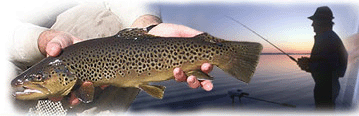
The North Carolina Wildlife Commission recommends the following catch and release handling policy: "Because trout in Delayed Harvest waters will be caught and released several
times, minimizing injury to fish is something anglers can do to help maintain
the quality of fishing over the entire season. Simply keep the following rules
in mind to ensure the successful release of trout. When a fish is hooked you
should enjoy the fight, but don't play the fish too long to prevent the fish
from being exhausted. This is particularly true during warmer weather. When
landing a fish it is best not to remove it from the water. If possible, remove
the hook using small long-nose pliers or forceps while the fish is still in
the water. If the fish is hooked deeply, cut the leader or snip off the hook.
Use a landing net with larger fish to keep them from flopping in shallow water
or on rocks, but be careful in handling the fish as fish nets will remove
the protective slime from fish. To revive an exhausted fish, hold it gently
with its head into the current until it is able to swim off on its own."
The North Carolina Wildlife Commission will continue to stock streams each month throughout the trout fishing season, so the fishing should remain good all season. The Pisgah State Fish Hatchery had an outstanding winter raising trout and the stocked mountain streams currently have an ample supply of trout. Information on stream stocking schedules can be found on the Wildlife Commission's website, www.wildlife.state.nc.us.

all contents copyright © 1999, greenville.com. contact: [email protected] or 828.253.2880
For listing and advertising information...