 | Greenville business & community directory |
|

This is an archived page that may contain outdated or incorrect information. Please visit www.Greenville.com for the latest news, events, and more.

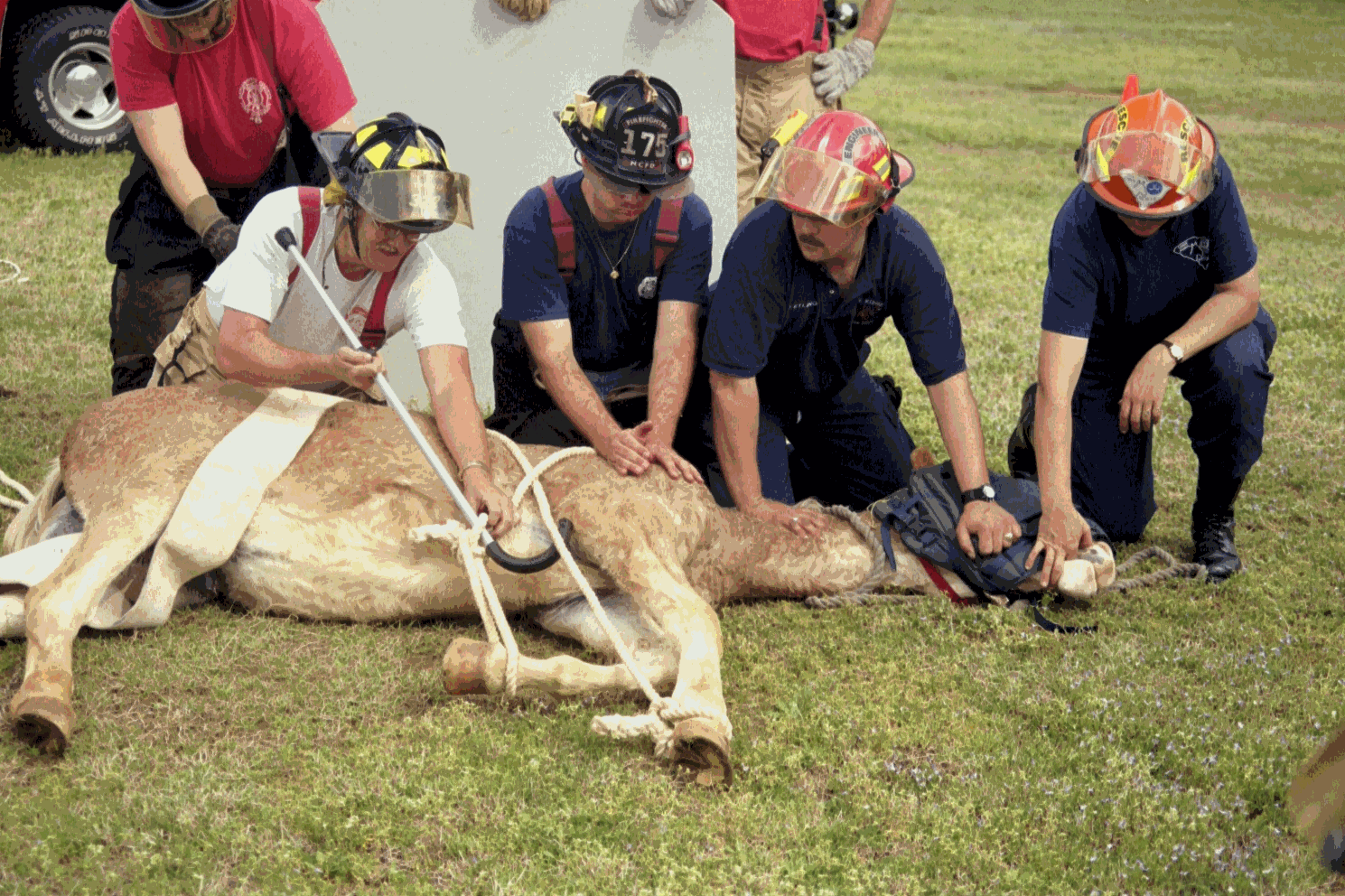 The South Carolina National Guard practiced lifting a live animal by helicopter at Clemson University in a training session on Monday, July 30, using emergency
response personnel and large-animal rescue teams to get
hands-on experience hooking up the sling and cable under
rotor-wash winds of more than 100 mph, similar to a
hurricane's force. The horse received a mild seditive prior to the air lift.
The South Carolina National Guard practiced lifting a live animal by helicopter at Clemson University in a training session on Monday, July 30, using emergency
response personnel and large-animal rescue teams to get
hands-on experience hooking up the sling and cable under
rotor-wash winds of more than 100 mph, similar to a
hurricane's force. The horse received a mild seditive prior to the air lift. Clemson University horse expert Tomas Gimenez, a professor of animal science, says, "The training is vital in case we have to rescue horses from flooded areas after a hurricane, it will be the National Guard who will airlift those horses to a safe location. The people in North Carolina faced this problem during Hurricane Floyd, and they had many problems rescuing horses by helicopter because they had not had any previous training." According to Peter Kent, Clemson University writer, "Emergency response leaders are devoting more attention to animal rescue. Experience during floods, forest fires and other potential disasters has shown that animal owners are reluctant to leave their dogs, cats, horses and other livestock in harm's way, even at personal peril."
South Carolina's rescue teams are outfitted with an Anderson Sling. It provides support over the horse's entire body and can be used to transport injured horses via trailer as well as helicopter. Other sling systems tend to put most of the horse's weight on the abdomen and chest. The Anderson Sling is attached to a metal frame with a connector to hook up to the cable from the helicopter. The practice rescue of Karma, (seen in top photo) went without a hitch, and the local rescue squads now think they have the training and expertise to handle a large animal rescue should the need arise. (Photos provided by Clemson University News Service.)
|

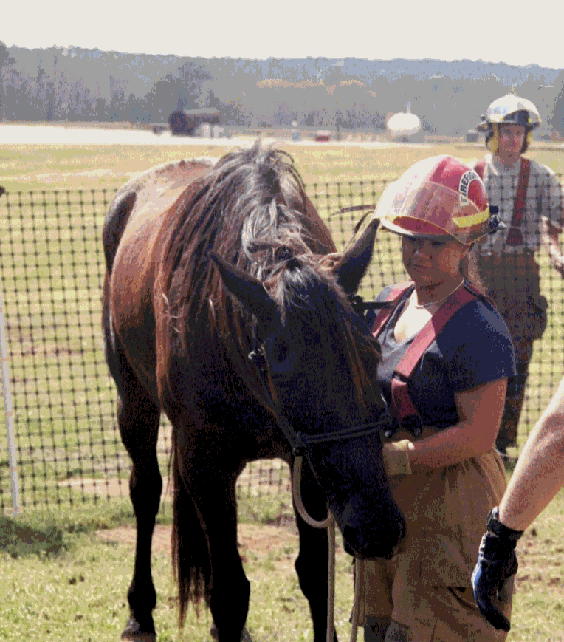 Doctor Venaye Reece, head of the S.C. animal disaster program, says, "The goal is to have large animal emergency rescue teams throughout the state that will know
how to deal with disasters involving large animals. The state is divided into four large
animal rescue team areas: Upstate, Midlands, Coastal one
(Charleston) and Coastal two (Beaufort).
Doctor Venaye Reece, head of the S.C. animal disaster program, says, "The goal is to have large animal emergency rescue teams throughout the state that will know
how to deal with disasters involving large animals. The state is divided into four large
animal rescue team areas: Upstate, Midlands, Coastal one
(Charleston) and Coastal two (Beaufort).