 | greenville business & community directory |
|

This is an archived page that may contain outdated or incorrect information. Please visit www.Greenville.com for the latest news, events, and more.

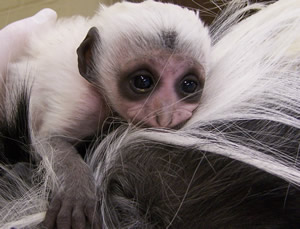
 The Greenville Zoo welcomed a new colobus monkey while the zoo was closed for the winter storm this week. The infant monkey is the third successful birth for parents Lami and Valentino who welcomed two males, Kumbe, one year ago, and Dayo, two years ago. Staff anticipate finding out the baby monkey�s gender after performing a routine neonatal exam in the next few weeks.
According to Greenville Zoo Director Jeff Bullock, a newborn colobus monkey is born all-white and can be seen clinging to his mother, providing a rare and striking visual for zoo visitors. At about 1-month-old, the infant monkey will begin to change color, finally gaining the black and white coloration at about 3-months-old. �The birth of this threatened species is an extraordinary event, and we hope people will venture out this weekend to see him as he makes his public debut,� said Bullock.
The colobus monkeys are on a breeding loan by the Species Survival Plan (SSP), which helps manage captive populations in North America. The SSP makes breeding recommendations and develops long-term research and management strategies for the species. As part of the loan, Lami came to the Greenville Zoo from the San Diego Zoo to be paired with the Valentino in July 2008. Native to Africa, the black and white colobus monkey is the most arboreal of all African monkeys and rarely descends to the ground. It uses branches as trampolines, jumping up and down on them to get liftoff for leaps of up to 50 feet. The name colobus is derived from the Greek word for �mutilated,� because unlike other monkeys, colobus monkeys do not have thumbs. Colobus monkeys are strictly leaf-eaters and spend most of their time in treetops, preferring to eat the tender young leaves. Accredited by the Association of Zoos & Aquariums (AZA), Greenville Zoo is rated one of the best tourist attractions in South Carolina, attracting over 270,000 people annually. Operated by the City of Greenville, the 14-acre facility features wildlife from around the world including giraffes, monkeys, giant tortoises and elephants. Visitors can also enjoy one of the zoo�s most popular exhibits, the Reptile Building, which is home to a variety of lizards, frogs, turtles and snakes. The Greenville Zoo is open seven days a week, except on Thanksgiving, Christmas and New Year's Day. The zoo�s hours of operation are from 10 a.m. to 4:30 p.m. and the gates close at 5 p.m. For more information about the Greenville Zoo, visit www.greenvillezoo.com or become a fan on Facebook. (Image provided by the Greenville Zoo.)
Looking for more happenings in the area? Check out Greenville.com's comprehensive visitor center.
|

 To celebrate the birth of the monkey, the Greenville Zoo will launch a baby naming contest. All name submissions must be submitted by February 10 to